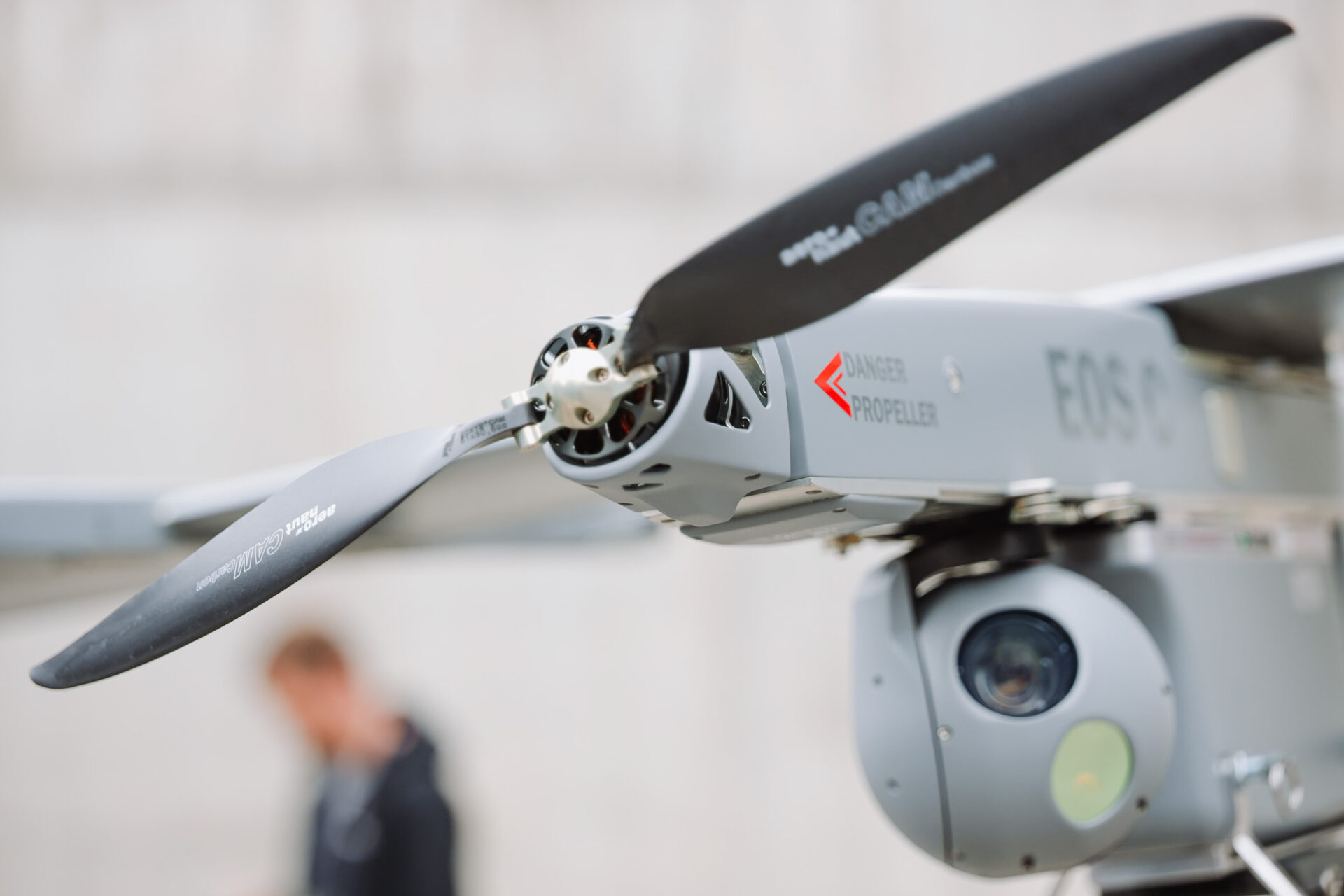
Estonian innovation programme Accelerate Estonia is working with public institutions to ease drone flight tests across four sites and pursue a legal path for electronic-warfare trials.
Despite its great importance, the drone industry is still facing shortcomings when it comes to the regulatory environment. Famous as a test bed for emerging tech, Estonia is working on a practical solution. The programme’s unmanned-aircraft case study describes a practical problem for Estonian developers: aircraft need repeated flights before they can be sold, but EU aviation permits, and restrictions on electronic signal jamming can slow product development. To solve that, a compact network of four test sites, currently at different stages of readiness, is being proposed.
Four drone test sites, four different stages
North of Tartu, the Estonian Aviation Academy is developing a test area with a planned flight zone of 10 by 30 kilometres and an anticipated maximum height of 2.8 kilometres. Its proposed arrangement would allow the area operator to handle risk assessments for drone flights, enabling companies to test without first obtaining the full, specific-category authorisation for each aircraft and operation.
The Academy of Security Sciences already operates a test area at Väike-Maarja. Its flight zone is 11 by 50 kilometres, with a maximum altitude of 1.5 kilometres. Companies generally still need a specific-category operating permit, although the academy can act as the operator when necessary. Accelerate Estonia’s detailed testing analysis names Estonian drone maker Threod Systems as a company with a cooperation agreement to use the site.
At Nurmsi, the Estonian Defence League operates a centre used by the Defence Forces and allies. Partner companies can conduct research experiments there under military aviation rules. Metrosert’s Applied Research Centre, meanwhile, plans smaller testing near Tallinn and a larger area in western Estonia that could support flights beyond visual line of sight and electronic-warfare trials. Those Metrosert facilities are plans, not operating sites.
Signal-jamming rules remain a barrier
Drone developers also need to see how their aircraft perform when radio links fail. Electronic signal jamming is currently tightly restricted in Estonia, so normal private-sector product trials cannot simply use it. Accelerate Estonia says it has worked with the Ministry of Justice and Digital Affairs on a draft amendment that would allow scientific institutions to conduct jamming tests for research and product development, then offer that capability to companies.
The case study says the draft was prepared for submission to Parliament in autumn 2026. It does not say the change has become law. Until legal changes and planned facilities are in place, developers must work within the operating permissions and capabilities of each existing site.
Testing access shapes the route to market
Accelerate Estonia is working with the institutions behind the sites so that flight areas serve private developers as well as public-sector users.
The immediate focus is DefenceTech, where aircraft need both flight testing and trials in contested communications conditions. The programme also identifies further work on urban operations and designated U-space airspace for future civilian uses.
Read the full study here.
Are you interested in trading with Estonia? Enterprise Estonia is providing sourcing services for foreign enterprises. Contact Estonian export advisors or use our free e-consulting service to start trade with Estonia.