Seven Estonian precision manufacturers take a joint stand at FMB 2026 in Bad Salzuflen from 3 to 5 November, showing machining, assembly and plant engineering that runs well past component production. The companies exhibit together in Hall 20, stand 800, at a fair that gathers more than 360 suppliers to the German mechanical engineering industry every year.
For machinery builders the question is no longer only who can cut a part to tolerance, but how much of the job a partner will carry. “Estonian companies combine specialised production with engineering, automation and short decision-making processes. This makes them attractive potential partners, particularly for medium-sized manufacturers,” says Leana Kammertöns, Business Development Manager at Enterprise Estonia, which organises the Estonian joint stand at FMB 2026.
Micrometre work for German medical customers
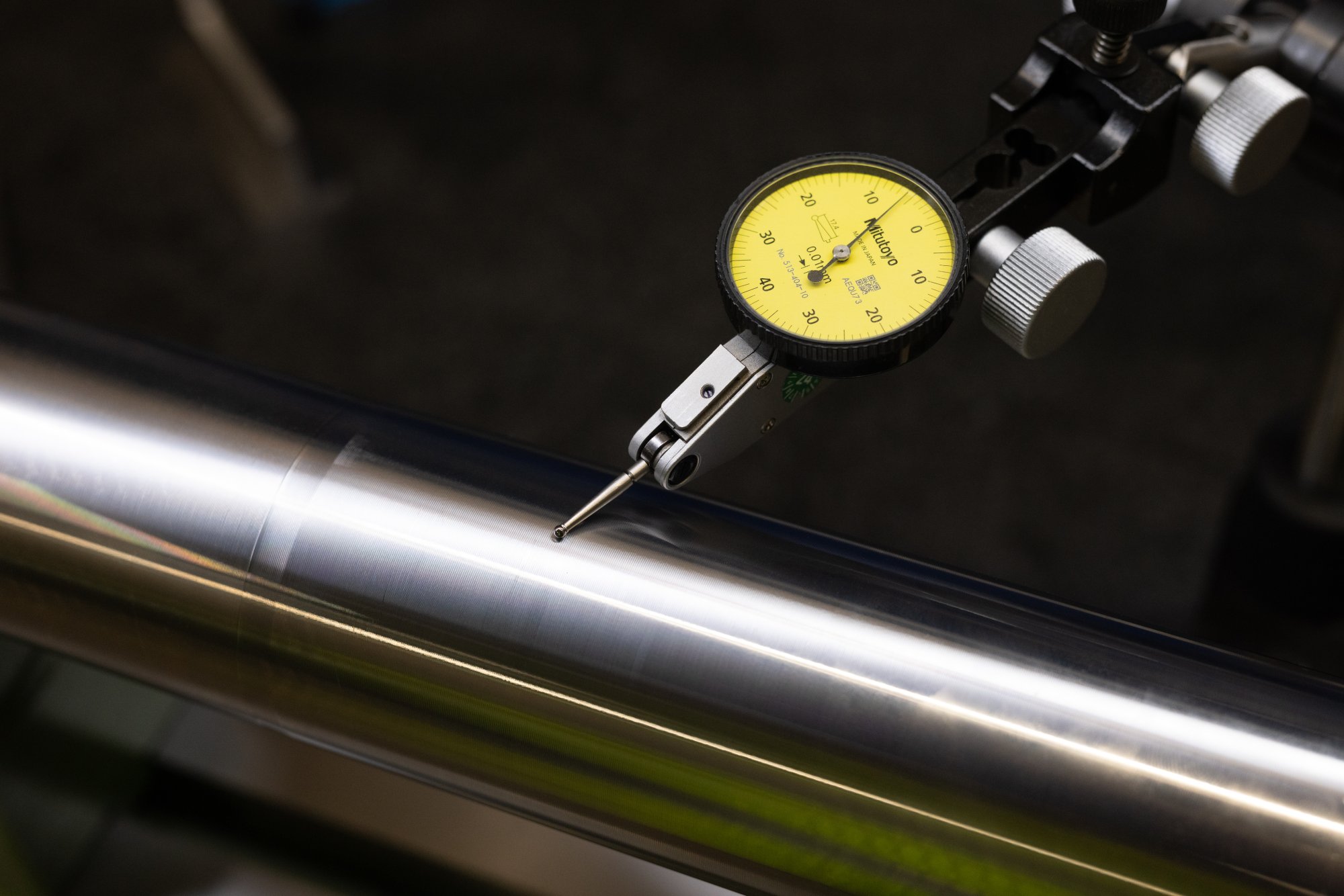
Who is at FMB 2026 and what’s their specialisation? Mikroonik turns components from 0.2 millimetres in diameter, holding tolerances as tight as ±0.002 millimetres, and supplies German manufacturers of endoscopy equipment and medical instruments. Parts at that scale are only worth buying if every batch repeats the first one, which is why the company has specialised in Swiss-type CNC turning since 1997 and inspects finished parts against the same drawing.
Radius Machining combines CNC turning and milling with metrology, hydraulics and assembly in one Tallinn plant, which keeps a part traceable from raw material to dispatch. Its camera mechanisms went into the SAMPLR robotic arm built for NASA’s Artemis programme, and annual sales to German customers have climbed to about €1.5M since 2021, according to the company.
At FMB 2026, production data becomes part of the service
Precision parts solve half the problem if orders, quality records and stock are hard to follow. Sheet metal manufacturer Valdek wrote its own production software, which carries an order from intake through planning and digital work instructions to quality control, and runs eight automated robots for laser cutting, punching and CNC bending. With Tallinn University of Technology and AI & Robotics Estonia it is also developing camera-based inventory monitoring.
From a single part to a working plant
Combining process steps is the second shift, also shown at FMB 2026. BLRT Masinaehitus runs CNC machining alongside manual and robotic welding to build frames for forklifts and automated guided vehicles. TB Works delivers welded and assembled machinery components up to twelve metres long and ten tonnes in weight.
Complete plants need design and control engineering as well. Thorsteel builds customised stainless-steel process plant for food, chemical and pharmaceutical customers, with engineering and automation inside the delivery. Bio Mobitek designs and builds biomass and waste-fuel boiler plants rated from 0.5 to 10 megawatts, handles automation, installation and servicing, reports more than 110 delivered projects and says its plants reach efficiencies of up to 94%.
Estonia’s machinery and metalworking industry employs one in three of the country’s industrial workers, engineering accounts for around 20% of industrial output, and in 2024 about 70% of manufacturing output was exported. Kammertöns presents “Smart Factory from Estonia: When Data Drive Production” at the FMB 2026 forum on 3 November from 11:40 to 12:00, and the Estonian stand hosts a networking event at 15:00 that afternoon.
Are you interested in trading with Estonia? Enterprise Estonia is providing sourcing services for foreign enterprises. Contact Estonian export advisors or use our free e-consulting service to start trade with Estonia.