Estonian defence industry companies are known for specialising in high-tech solutions that address the needs of modern warfare, where machines are increasingly replacing human soldiers on the battlefield.
It is often said that warfare today resembles an IT battlefield. Therefore, it is no surprise that Estonia, known as an IT powerhouse, produces companies capable of delivering solutions that are already highly valued worldwide for their uniqueness. Thanks to these innovations, several Estonian companies have the potential to grow into globally influential enterprises.
Some of the most important Estonian defence companies and their innovative products are already having a substantial impact on the battlefield.
Unmanned platforms help minimise risks to human lives
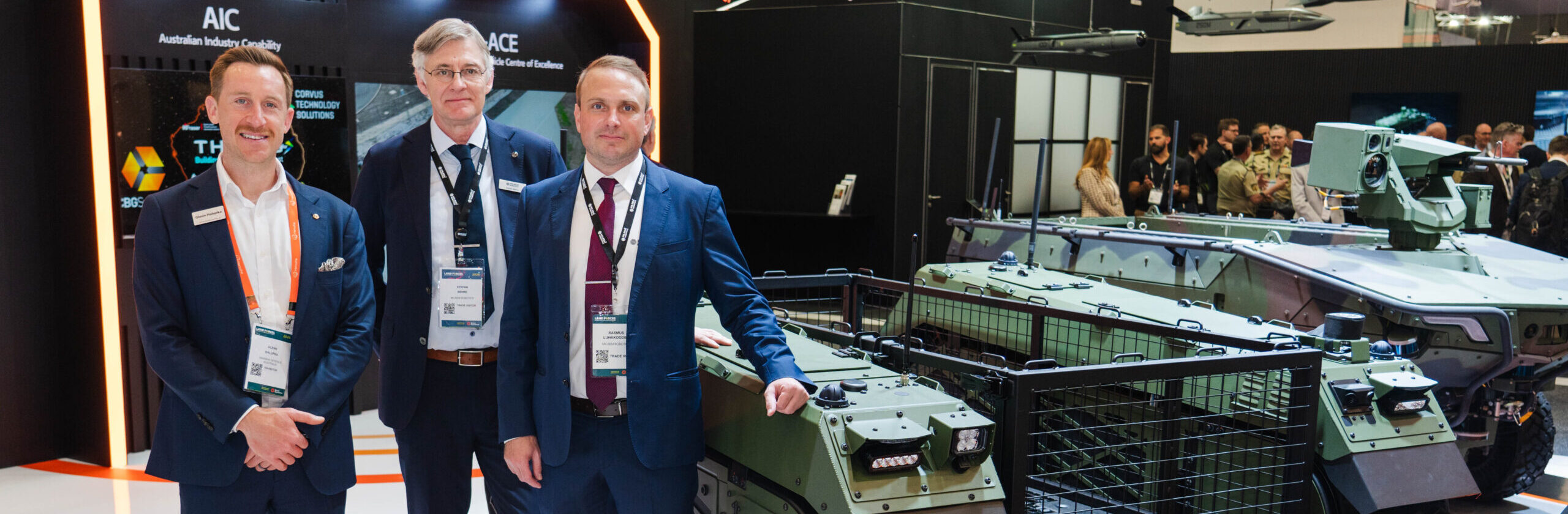
Established in 2013, Milrem Robotics is the world’s leading developer of robotics, autonomous systems, and systems integrators. The company’s key products are the THeMIS UGV, the RCVs HAVOC, VECTOR, and the MIFIK – Milrem Intelligent Functions kit.
The THeMIS Unmanned Ground Vehicle (UGV) is an advanced multi-role defence platform designed for various operational tasks. Its modular and versatile design allows customisation from combat configuration to intelligence and logistics operations support, all while reducing risks to human lives. The vehicles are currently assisting Ukrainian soldiers in the war with Russia.

Milrem Type-X RCV7. Photo: Milrem Robotics
The HAVOC 8×8 Robotic Combat Vehicle (RCV) is an advanced ground combat platform enhanced with intelligent functions and designed for modern warfare. This vehicle is equipped with AI-driven navigation and excels in offensive and defensive operations across diverse terrains, environments, and climates.
The VECTOR RCV is designed to revolutionise modern battlefield operations. As a highly adaptable combat platform enhanced with autonomous functions, VECTOR augments mission effectiveness by reducing risk to troops, increasing firepower mobility, and offering superior situational awareness.
Drones used in 25 countries, including NATO members
The military technology company Threod Systems specialises in the development and production of fully electric, fixed-wing reconnaissance drones, electro-optical payloads, and launcher systems for attack or target drones. Their most well-known unmanned aerial system, the EOS C VTOL, is a small ISTAR drone weighing only 14.5 kilos, providing its end users with many capabilities typically found in larger unmanned platforms. The latest development adds laser designation capabilities to its arsenal.
Threod’s products are used by armed forces and law enforcement agencies in 25 countries, including 7 NATO member states and Ukraine. Both the EOS C VTOL and Threod’s UAV (Unmanned Aerial Vehicle) launcher system, CATA, are regularly used by Ukrainian operators in actual combat situations. Threod’s CATA is known for its unique design and software, which enables rapid deployment and quick extraction in tactical situations.
Another company gaining attention is ASAX Innovation, whose unmanned ground vehicle ASAX H-2 is specifically designed for evacuating wounded personnel from dangerous areas. It is expected to be a game-changer in military medicine. This remotely controlled vehicle enables medical personnel to stay at a safe distance while ensuring rapid medical assistance in critical situations. The vehicle has a payload capacity of 300 kg and can travel 50–100 km on a single refuelling.
ASAX Innovation collaborates with SkyLab Defence Robotics, a Ukrainian defence company, to develop UGV radio control systems, as well as with Maru Defence, an Estonian company, to create a comprehensive evacuation solution. As part of this partnership, ASAX’s unmanned ground vehicle evacuates wounded soldiers to Maru Defence’s stabilisation point near the front line, from where they are transported to a hospital.
Rantelon’s AI-driven systems detect threats before they escalate
Founded in 1995, Rantelon is the most renowned developer and manufacturer of specialised electronic warfare equipment in our region. The company is also involved in the development of the Baltic Drone Shield.
Rantelon is primarily known for its drone detection and countermeasure systems, which are equipped with an innovative artificial intelligence system capable of detecting drones that would typically remain unnoticed. The system improves the accuracy of drone direction detection and ensures more effective airspace protection.
On the battlefield, Rantelon’s drone detection system DTS-9058 can detect enemy drones even before they take off. In addition to identifying the direction and presence of UAVs, the DTS-9058 is also capable of locating the remote control, working excellently also in urban environments.

Threod EOS. Photo: Threod Systems
Silent skies, sharp eyes: counter-drone systems
Two companies specialising in automated drone surveillance and countermeasure solutions that have attracted significant international attention are Marduk Technologies (founded in 2016) and DefSecIntel Solutions.
Named after Marduk, the Babylonian protector god, Marduk Technologies develops systems often described as “operating in the future already today.” Specifically, their systems – resembling enormous binoculars – are designed to detect, track and classify the increasingly prevalent next-generation drones, which operate in radio silence and engage in reconnaissance.
One of the company’s most notable innovations is the Marduk Shark passive electro-optical drone detection and precision targeting system, capable of detecting mini-drones from 2.4–5 km away and tracking them with extreme accuracy. The system won 3rd place in the European Border and Coast Guard Agency (Frontex) innovation competition for detecting low-flying objects (LFO), competing against 21 other companies.
Another key product in Marduk Technologies’ portfolio is the Marduk Piraya, a counter-drone system designed for surveillance and protection of critical infrastructure and national borders. The company has been actively participating in various EDF projects, and also collaborating with various European defence primes.
Situational awareness systems
In the field of ultra-low-latency situational awareness systems for armoured vehicles and unmanned robots, the Estonian-Croatian startup Vegvisir has been making waves. Their augmented reality-based 360-degree systems are designed to enhance the battlefield capabilities of vehicle crews and command centres by providing an unprecedented level of situational awareness, facilitating faster and more informed decision-making. Several defence industries worldwide have already taken an interest in their products: Core, Remote, and Virtual Command Station.
The Core consists of augmented reality goggles that provide armoured vehicle crews with a 360-degree “see-through-hull” capability, offering real-time awareness of the surrounding environment. Remote is designed for monitoring the surroundings of unmanned or semi-autonomous systems, improving situational awareness for remote-controlled and autonomous platforms. Virtual Command Station replaces traditional screens with a virtual display inside augmented reality goggles, allowing battlefield commanders to manage real-time data from multiple sources within a single, comprehensive view, significantly improving coordination among units.
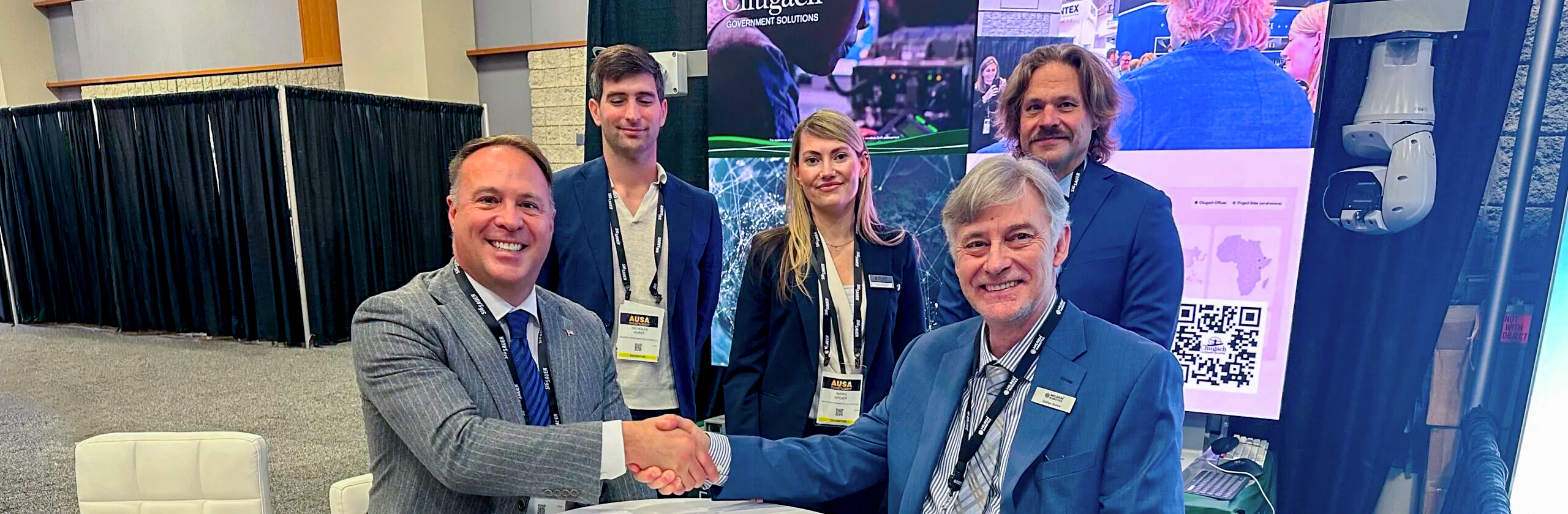
At the beginning of 2025, Vegvisir signed a cooperation agreement with Milrem Robotics to enhance the situational awareness of unmanned vehicles. Their joint objective is to strengthen each other’s technological capabilities and ensure seamless integration between Milrem’s autonomous ground vehicles and Vegvisir’s advanced 360-degree visualisation systems.
This content is funded by the European Union – NextGenerationEU.
Are you interested in trading with Estonia? Enterprise Estonia is providing sourcing services for foreign enterprises. Contact Estonian export advisors or use our free e-consulting service to start trade with Estonia.