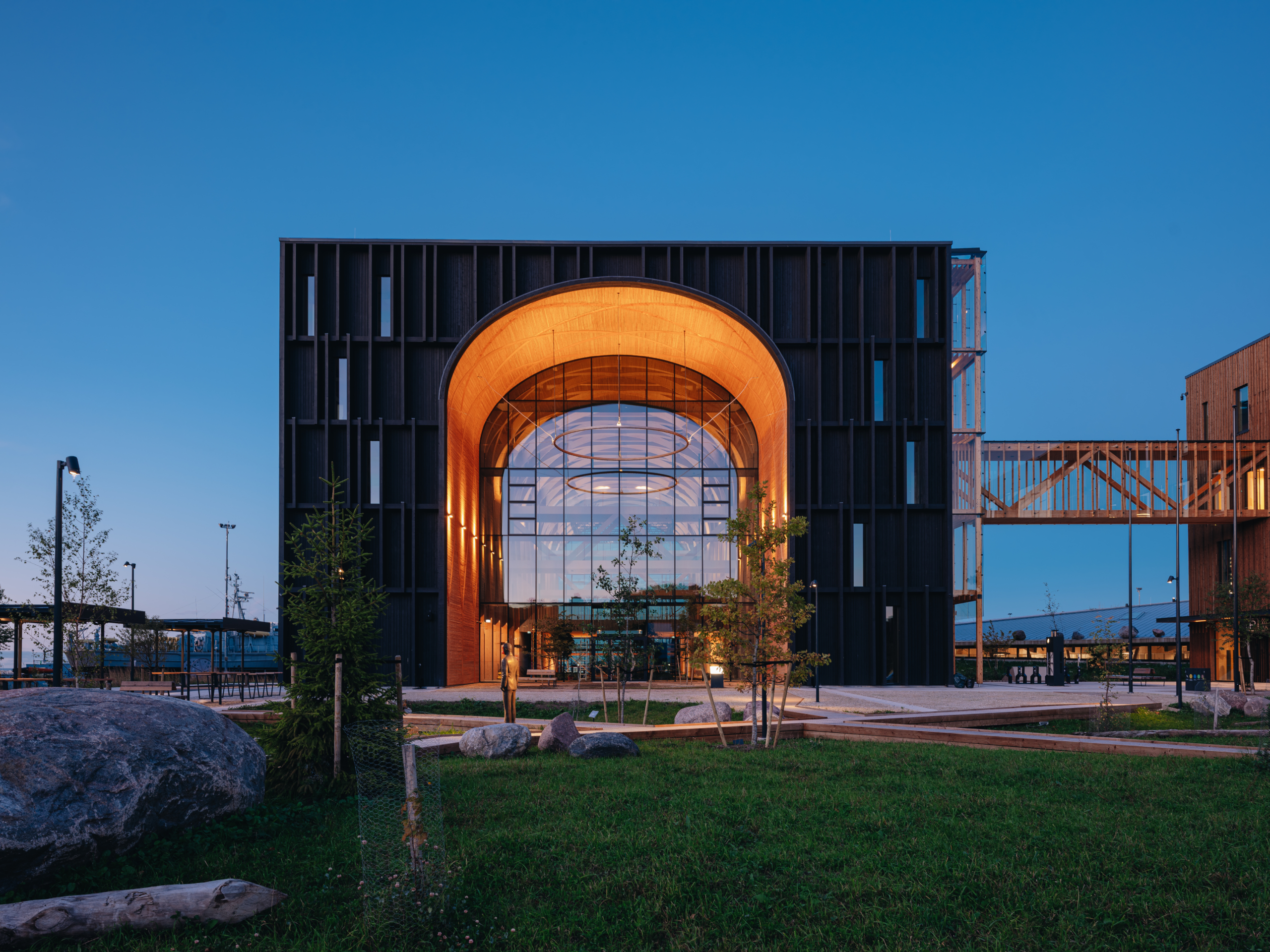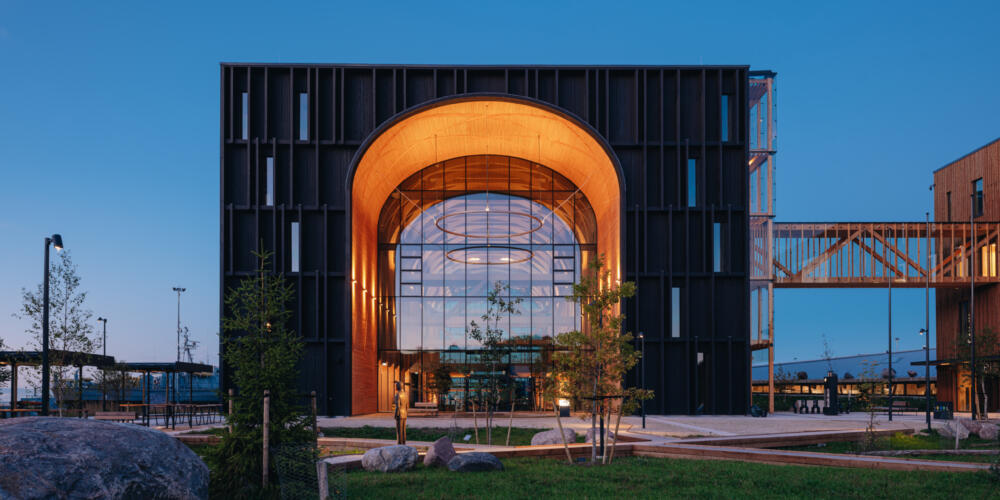
Taru, Estonia’s largest public timber building, officially opened in Tallinn’s Noblessner district on 5 November, bringing around 570 employees from seven environmental and spatial-planning institutions into one complex.
The building is officially known as Loodusmaja, or Nature House, and takes the name Taru — Estonian for beehive — for its role as a shared working and meeting place. It is a nearly zero-energy building, and almost one-third of the complex is given over to public space. The largest part of that will house the Estonian Museum of Natural History’s main exhibition, scheduled to open in 2028.
A shared home for the environmental sector
Taru brings together the Environmental Board, the Estonian Environment Agency, the Environmental Investment Centre, the Language Board, the Institute of the Estonian Language, the Land and Spatial Development Board and the Estonian Museum of Natural History. Prime Minister Kristen Michal, who attended the opening, described the building as the culmination of more than a decade of preparation.
“Taru is Estonia’s largest timber building and also a nearly zero-energy building, creating new high-quality public space. For North Tallinn and the Noblessner district, Taru will become a new public destination by the sea,” Michal said.
Energy and Environment Minister Erkki Keldo described the name as deliberate. “Just like in a beehive, ideas, knowledge and solutions are developed here together. Taru has been designed as a meeting place for public institutions and civil society, bringing together knowledge, expertise and practical solutions to help the government, businesses and each of us make better decisions,” Keldo said.
A public timber building that stores carbon
The complex stores approximately 3,900 tonnes of CO₂ equivalent over the long term. Its timber structure is around seven times lighter than a comparable building made from solid masonry, which reduces foundation costs and the building’s carbon footprint. The state also expects the consolidated complex to cut its annual administrative costs by €500,000 to €700,000.
Estonian suppliers, German production technology
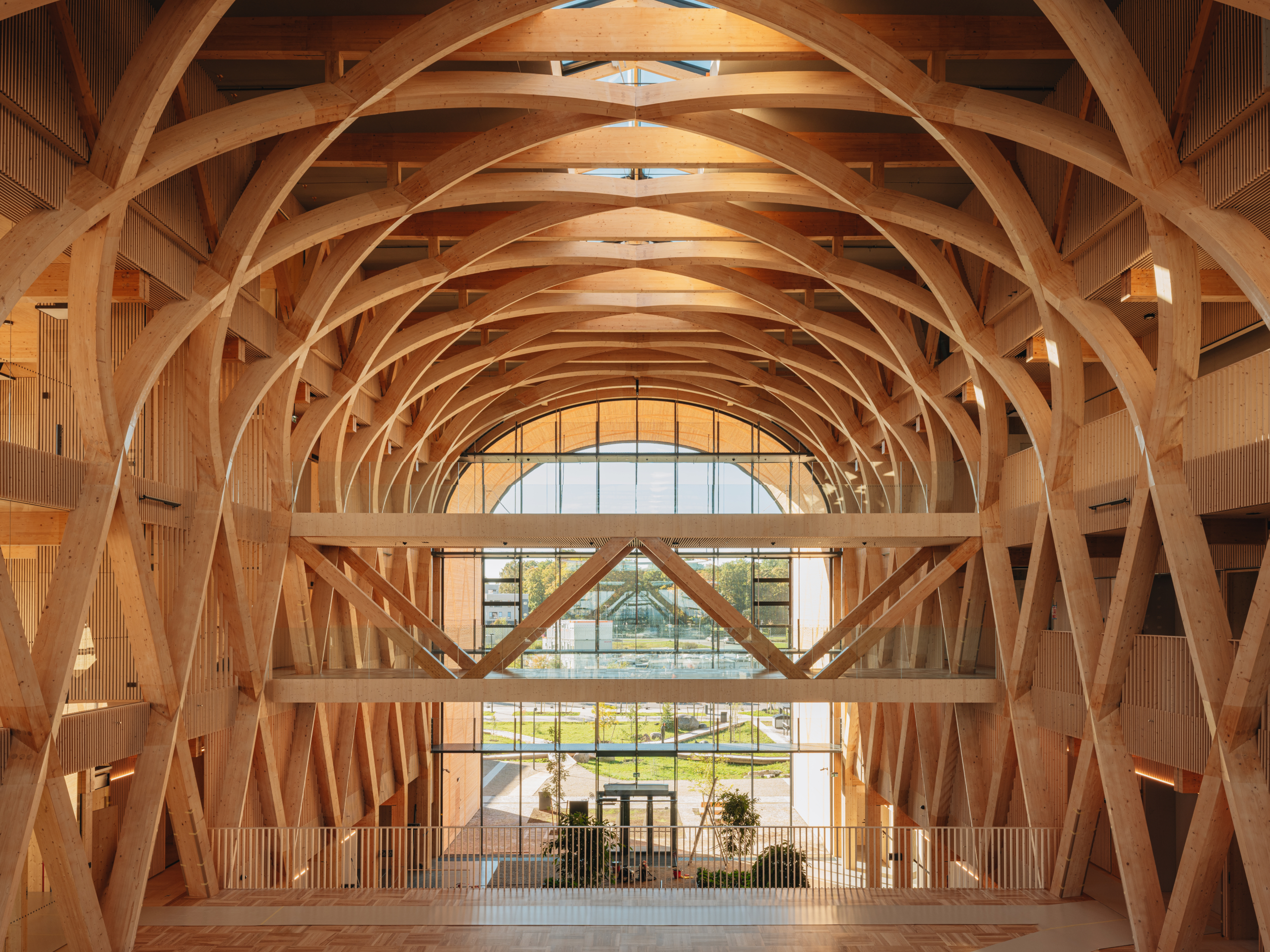
Estonian companies delivered the project, drawing in part on German manufacturing technology and materials. Arcwood manufactured and installed 5,280 cubic metres of cross-laminated timber and glued laminated timber, produced on an automated CLT line supplied by German machinery manufacturer Minda Industrieanlagen and bonded with adhesives from its long-standing German partner Türmerleim. The arcade’s geometry required glulam beams measuring up to 31.2 metres.
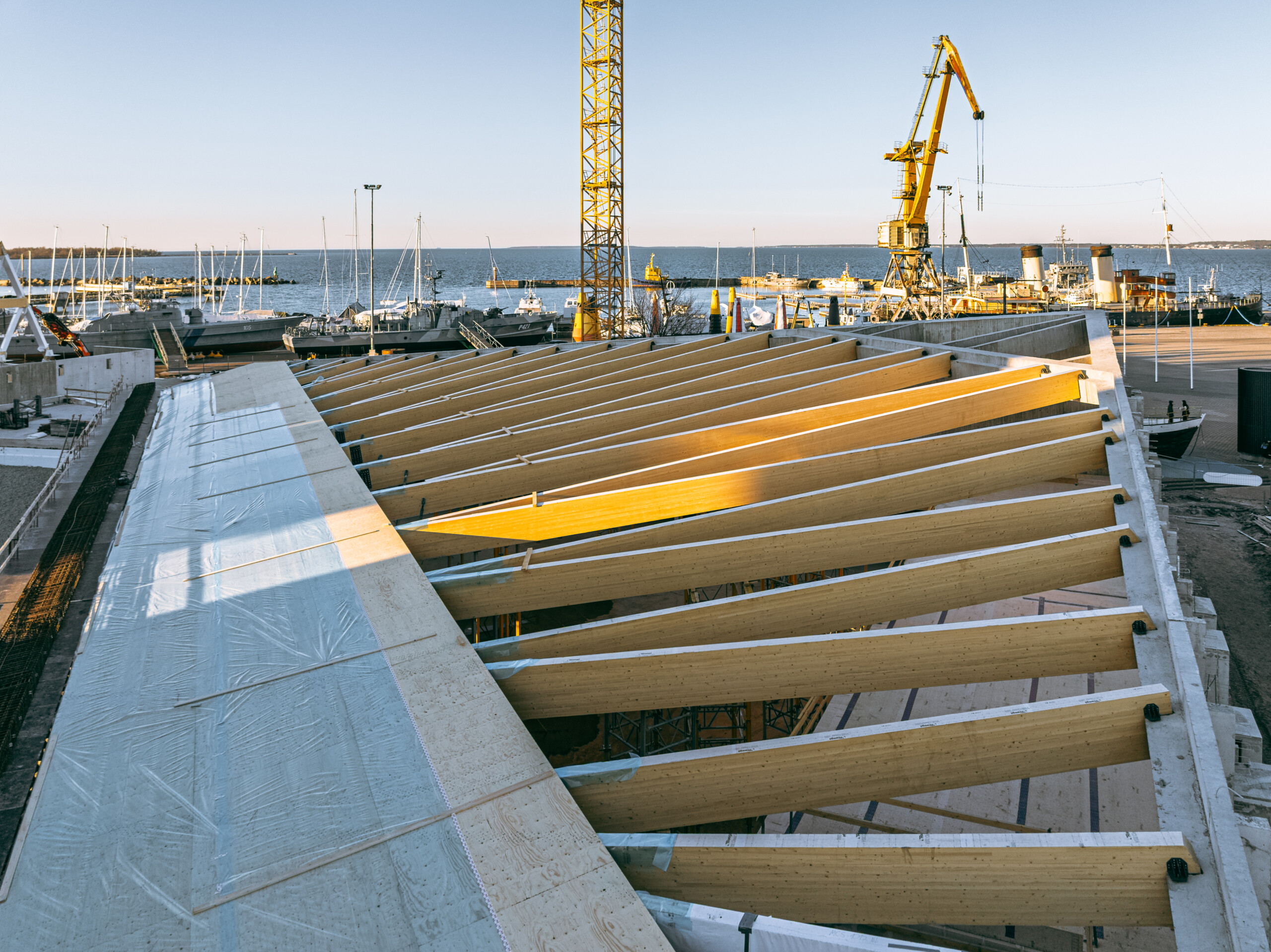
German systems also sit behind the interior finishes: Lindner Group supplied floor and ceiling systems that conceal technical installations while keeping the timber architecture visible. For the façade and roof, EstNor installed around 8,000 square metres of prefabricated timber elements with pre-installed windows, allowing weather-independent installation without scaffolding and reducing waste on site.
More information on Estonia’s wood industry is available from Enterprise Estonia.
Are you interested in trading with Estonia? Enterprise Estonia is providing sourcing services for foreign enterprises. Contact Estonian export advisors or use our free e-consulting service to start trade with Estonia.