Norway’s Northern and Estonia’s Vindr have signed an MoU for renewable energy supply to a €1B+ green hydrogen and data centre development in Pärnumaa — one of the largest industrial bets yet on Estonia’s clean energy future.
A Memorandum of Understanding (MoU) signed in Tallinn on 8 May marks one of the boldest steps yet in Estonia’s push to become a bigger player in European green energy sector. The agreement, inked at the residence of Norway’s Ambassador to Estonia, brings together Nordic–Baltic energy developer Northern Europe Energy Group AS (Northern) and wind energy developer Vindr Estonia, with the aim of supplying renewable electricity to a new green hydrogen production facility — and potentially a large-scale data centre — on Estonian soil.
Estonia has set a target of switching to 100% renewable electricity and achieving carbon neutrality by 2050. Its Hydrogen Roadmap and Hydrogen Infrastructure Strategy outline the country’s ambition to become a hydrogen exporter, leveraging growing offshore and onshore wind capacity.

MoU for renewable energy supply
Green energy: what’s being planned, and where
The centrepiece of Northern’s Estonian plans is a site in Urissaare, in the Häädemeeste municipality of Pärnumaa — a coastal region in south-west Estonia, close to the Latvian border. The development would combine a Power-to-X production plant with a potential hyperscale data centre. Total planned investment exceeds €1 billion, with at least 100 new jobs expected.
Power-to-X (PtX) is an umbrella term for technologies that convert surplus renewable electricity into other energy carriers or industrial chemicals. In Northern’s case, the focus is on two specific outputs: eSAF (electro-Sustainable Aviation Fuel, a synthetic jet fuel produced from green hydrogen and captured CO₂) and green ammonia (used in fertilisers, shipping fuel, and energy storage). Both are considered critical to decarbonising sectors — aviation and shipping — that cannot easily be electrified directly.
The MoU itself establishes the framework for a long-term Power Purchase Agreement (PPA) between Northern as energy buyer and Vindr as producer. A PPA locks in energy prices and volumes over a defined period, giving the buyer cost predictability and giving the producer the revenue certainty needed to justify large capital investment in wind infrastructure.
Beyond Pärnumaa, Northern has outlined further ambitions: large-scale green hydrogen production from Saaremaa, Estonia’s largest island, with the hydrogen to be transported onward to Germany via the Baltic Sea Hydrogen Collector — a proposed undersea pipeline infrastructure project connecting Baltic producers to Central European demand.
Estonia’s renewables context
Estonia’s energy transition has accelerated considerably in the last few years, to provide business with more clean, accessible and predictable energy supply.
The country’s Hydrogen Valley initiative — designed to make Estonia the world’s first nationwide hydrogen economy zone — now counts more than 30 local and international institutional partners. Separate state-backed investment programmes are already supporting projects including Estonia’s first large-scale green hydrogen and ammonia production complex, being built in Sillamäe on the north-east coast.
The Northern–Vindr deal adds another layer. Vindr Estonia is developing a portfolio of onshore wind projects with a combined potential annual output of 1,500 GWh — enough to power serious industrial-scale hydrogen production. For Northern, Estonia offers a combination of factors that few other markets can match: proximity to Scandinavian energy infrastructure, access to Baltic Sea wind resources, a stable regulatory environment, and direct connectivity to the Nord Pool electricity market, which links the Baltic states to broader Nordic trading.
What the principals said, and what comes next
“Projects like the one planned in Häädemeeste show exactly how green hydrogen and renewable energy can serve both goals at once, strengthening Estonia’s energy independence while attracting long-term industrial investment,” said Estonia’s Minister of Energy and the Environment, Andres Sutt.
Thor Magnus Rovik, CEO of Northern, pointed to the structural opportunity: “Predictable regulations, stable governance, access to renewable resources, and proximity to continental European markets, combined with the industrial strategy for green hydrogen, create an attractive environment for us.”
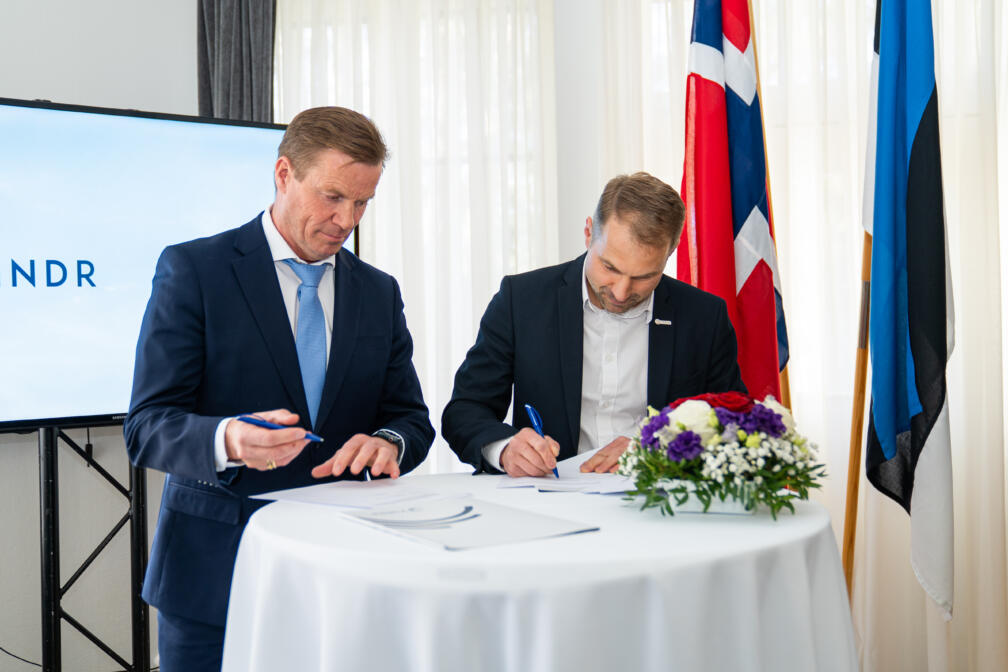
Norwegian Ambassador Marius Dirdal noted the bilateral dimension, describing the collaboration as “a remarkable project for the cooperation of both countries, with a lot of potential to drive innovation, sustainability, and economic growth across the region.” Norway, already a leading European hydrogen producer, has a clear strategic interest in developing supply chains across its Baltic neighbourhood.
“By strengthening energy security and reducing reliance on imports, Vindr is also helping to lay the groundwork for emerging industries such as hydrogen production. The company’s efforts contribute to building a more competitive, resilient, and environmentally sustainable energy system in Estonia, positioning renewable energy as a key driver of long-term economic growth,” emphasized Marko Viiding, CEO and co-founder of Vindr Baltic.
An MoU is a statement of intent rather than a binding contract — detailed project development, permitting, and financing will follow before any ground is broken. If built, Urissaare project will stand as one of the most substantive green industrial commitments Estonia has attracted to date.
Are you interested in trading with Estonia? Enterprise Estonia is providing sourcing services for foreign enterprises. Contact Estonian export advisors or use our free e-consulting service to start trade with Estonia.