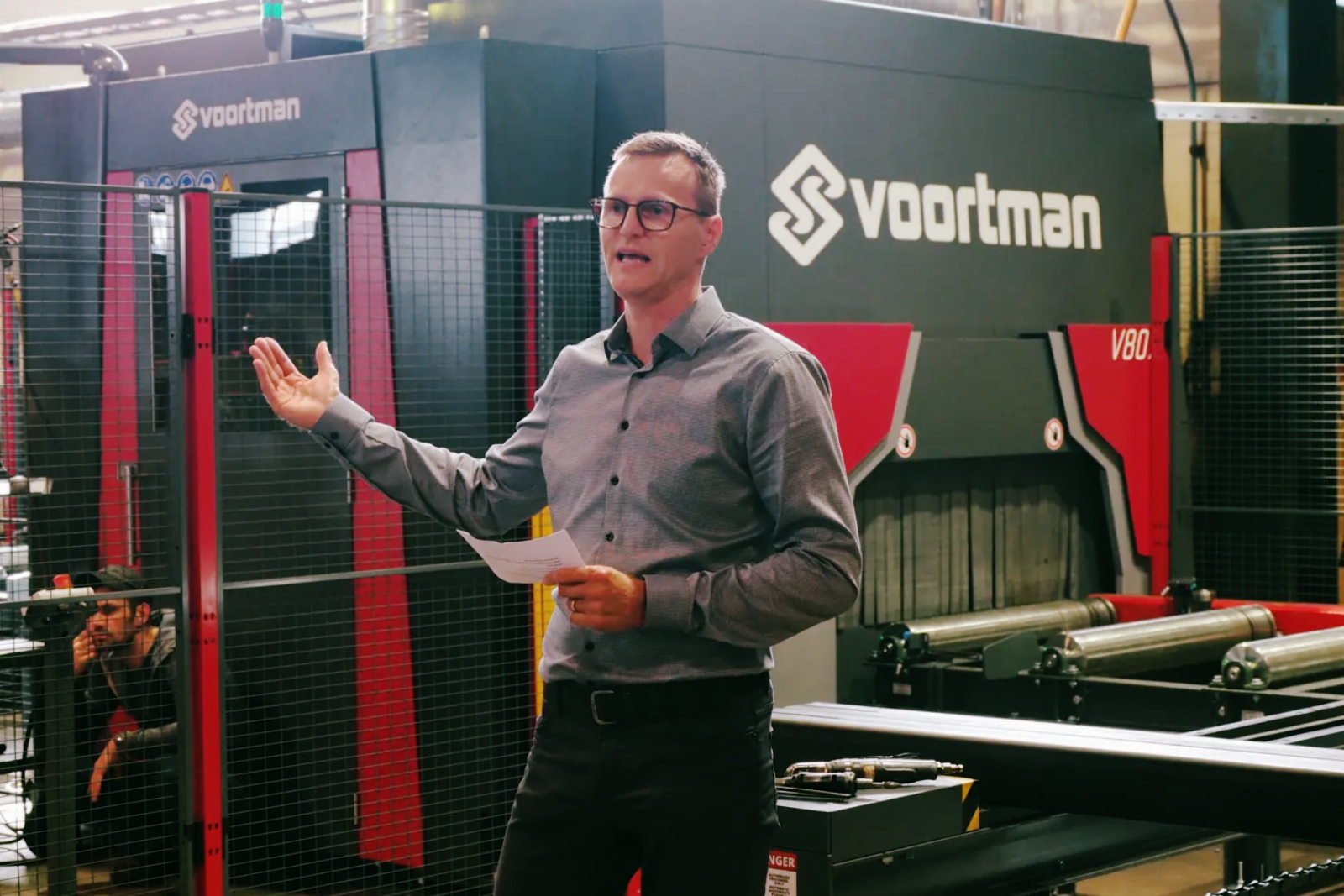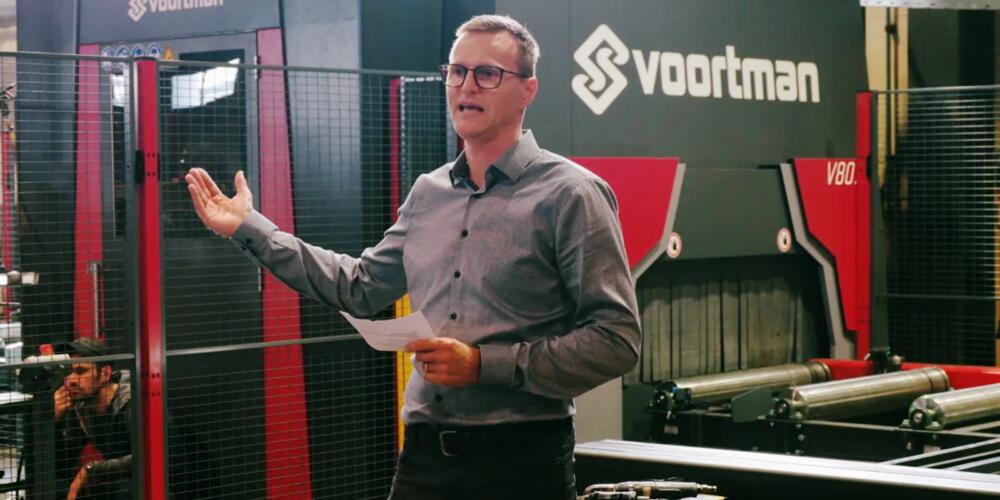
Maru Metall, an Estonian steel structure manufacturer, has commissioned a nearly €1M Voortman V807 robotic profile-processing line at its Ardu plant, which the company says is the only equipment of its kind in Estonia.
The investment is intended to connect design and manufacturing in a more continuous digital workflow, reduce manual operations in profile preprocessing and improve the working environment, says official press-release. The line can process structural steel profiles up to 15 metres long, with a maximum cross-sectional envelope dimension of 1,100 millimetres.
“We didn’t simply invest in a new cutting machine. Our goal is to transfer the geometry created in the designer’s model directly into production as seamlessly as possible, eliminating manual measurement, template making, and several intermediate operations from the workflow,” said Heiti Zukovits, Chairman of the Management Board at Maru Metall.
Knowns for its smart workforce and manufacturing capacity, Estonia and its businesses keep up with the innovations in automation and process optimizations.
Robotic line brings design data into production
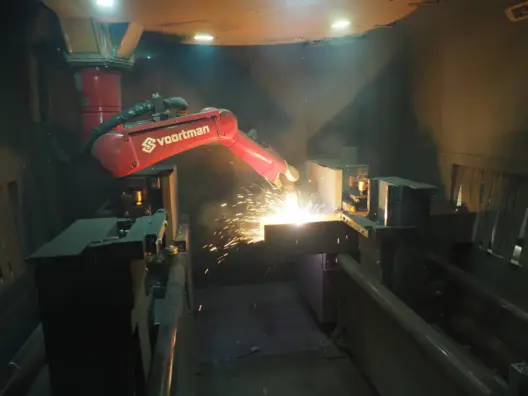
The V807 uses robotic plasma cutting to carry out straight and complex geometric end cuts, cutouts and penetrations, round and slotted holes, weld-preparation bevels and assembly markings. It can process profiles on all four sides without manual flipping. The markings transfer the positions of stiffeners and connecting parts from the designer’s digital model onto the profile, reducing manual layout work before assembly.
The equipment handles HEA, HEB, IPE, UPE and UNP profiles, as well as RHS and SHS tubes, L-profiles and flat bars. The plant’s long raw-material stock also allows parts to be nested by project or profile group, helping reduce material scrap.
Two processing routes at the Ardu plant
Maru Metall’s automation programme began in 2009 with the acquisition of a Kaltenbach automatic drilling and sawing centre. That system continues to handle fast sawing and high-precision drilling, while the V807 adds more complex geometry and multi-stage profile processing.
“The Kaltenbach continues to ensure fast sawing and high-precision drilling. The V807 adds the freedom to fabricate complex workpiece geometries that previously required multiple steps and extensive manual labor,” Zukovits said. “We no longer have to choose between fast, accurate drilling or flexible geometry. Now we have both capabilities.”
Using the two systems together allows production planning to select the most suitable processing route for each component. The aim is to move parts to assembly with the required cuts, holes and markings completed, reducing later manual work and the risk of rework.
Investment also targets the working environment
Before the investment, complex cutouts and other profile-processing work was carried out with manual plasma torches in the main production shop. The V807 places plasma cutting inside an enclosed automated chamber, where fumes are captured at the source and routed through a filtration system.
“This is not just an investment in productivity. We are moving a large portion of manual plasma work into a controlled automated process separated from the operator. Therefore, it is an investment in quality, our people, and the next stage of Maru Metall’s development,” Zukovits said.
The company’s profile of its steel-structures business says the Ardu plant covers 10,000 square metres, employs 110 people, can produce up to 8,000 tonnes of structures a year and exports up to 80% of its output, mainly to Scandinavian countries. The robotic-line investment was co-financed by the European Union through the Cohesion Fund under the project “Maru Metall AS Resource Efficiency Investments”. The grant of €380,002.50 was administered by the Environmental Investment Centre (KIK).
Are you interested in trading with Estonia? Enterprise Estonia is providing sourcing services for foreign enterprises. Contact Estonian export advisors or use our free e-consulting service to start trade with Estonia.