The development of green technology has reached a stage where it is no longer considered solely as part of environmental policy. These are solutions that reduce dependence on imported fuels and critical raw materials, spread risks, and maintain control over strategic supply chains, writes Kädi Ristkok, head of Cleantech Estonia, who outlines what to expect from green technology more broadly and in Estonia in the coming year.
Green technologies help to produce more locally, more flexibly, and more predictably. These are characteristics that have become crucial in a geopolitically unstable world. The question is no longer whether to develop green technologies, but how to use them in a way that strengthens the security of Europe and Estonia and reduces vulnerability to external shocks.
“Green technologies make it possible to reduce dependence on unstable import sources and strengthen Europe’s control over its energy supply and industrial capacity.”
Kädi Ristkok, head of Cleantech Estonia
The impact of geopolitics and more cautious capital markets
The geopolitical situation has made green technologies a clearly strategic issue for Europe. Energy crises, supply chain disruptions, and growing competition for critical technologies have shown that energy security and resource security are inextricably linked to technological choices. Green technologies make it possible to reduce dependence on unstable import sources and strengthen Europe’s control over its energy supply and industrial capacity.
Europe’s early investment in renewable energy has created a strong starting point, but today the focus has shifted from ambition to implementation. The European Union’s Clean Industrial Deal reflects the understanding that climate and environmental goals can only be achieved if industrial competitiveness and security of supply are strengthened at the same time. The question of where and how strategic technologies are produced is becoming increasingly important. Clear local product requirements for certain critical technology categories would help us to secure European know-how, production capacity, and security of supply in the future.
“Climate and environmental goals can only be achieved if industrial competitiveness and security of supply are strengthened at the same time.”
Kädi Ristkok, head of Cleantech Estonia
The stability and reliability of the energy system increasingly depends on the flexibility of networks. The wider deployment of renewable energy requires smart grids, storage solutions and demand management. The European Union’s electricity network policy package provides an opportunity to create a framework through which green technologies can be implemented more systematically in the service of energy security. Without strong and flexible infrastructure, even the most ambitious production capacities will remain underutilized.
Capital markets have also adapted to the new focus. Investors are generally more cautious in all areas today, but are very interested in investing in projects that have a clear strategic role, lower geopolitical risk, and the ability to operate in market conditions. Money is flowing into solutions that strengthen security, reduce dependencies, and create long-term value.
Practical innovation: fewer promises, more resilience
Green technology innovation is increasingly moving towards solutions that offer measurable benefits. For example, energy savings, improving the efficiency of existing systems, and consumption management are developing rapidly—areas where results are quickly visible and scalable. At the same time, new solutions are being developed and technologies that have already proven themselves are being expanded.
“Money is flowing into solutions that strengthen security, reduce dependencies, and create long-term value.”
Kädi Ristkok, head of Cleantech Estonia
Material use and the circular economy are becoming increasingly important. Industrial waste, used batteries, and end-of-life materials are no longer waste, but resources. Solutions that enable the efficient reuse and recycling of materials, reduce both environmental impact and dependence on imports of critical raw materials.
Artificial intelligence is an amplifier of green technologies
The rapid spread of artificial intelligence presents a significant paradox from the perspective of green technology. On the one hand, AI is a powerful tool that enables the optimization of energy use, management of consumption, and streamlining of industrial processes. It is widely used in various green technology solutions. On the other hand, artificial intelligence itself is one of the fastest growing technology sectors in terms of energy and water consumption. Data centers require large amounts of electricity and cooling, and many of them still rely on fossil fuels and water-intensive solutions.
“If we can meet the growing resource demands of AI in a clean, flexible, and local way, we will create a model that can be applied in the context of accelerating electrification.”
Kädi Ristkok, head of Cleantech Estonia
This is where green technologies become indispensable, rather than optional extras. Renewable energy, local energy production, energy storage, and smart consumption management are key factors in reducing the footprint of AI systems. Water-efficient cooling technologies and recirculating water systems are also becoming increasingly important, enabling data centers to operate without placing excessive strain on local water resources.
Artificial intelligence is therefore not only a user of green technology, but also a test case. If we can meet the growing resource demands of AI in a clean, flexible, and local way, we will create a model that can be applied in the context of accelerating electrification.
Estonia’s role and competitive advantage
Estonia has the prerequisites to make green technology an influential export sector. We have several advantages in this regard, first and foremost, of course, the Estonian green technology companies that already operate globally and put us on the map as a country in this key sector. In addition, we have strong research groups in several important areas where new green technology solutions are being developed.
Our strong digital economy also supports us in the field of green technologies and renewable energy. For example, we were the first country in the world to introduce smart electricity meters nationwide. As a result, Estonia has seen the emergence of several strong energy consumption management service providers. Real-time data-based consumption management, flexible pricing, and the integration of distributed generation have given us practical experience that many countries are still in the process of developing. This reduces the need for costly storage solutions, increases network flexibility, and strengthens energy security in both normal and crisis situations.
“Renewable energy and circular economy solutions for materials increase defence capabilities by meeting the defence sector’s needs for energy autonomy, security of supply, low visibility, and logistical independence.”
Kädi Ristkok, head of Cleantech Estonia
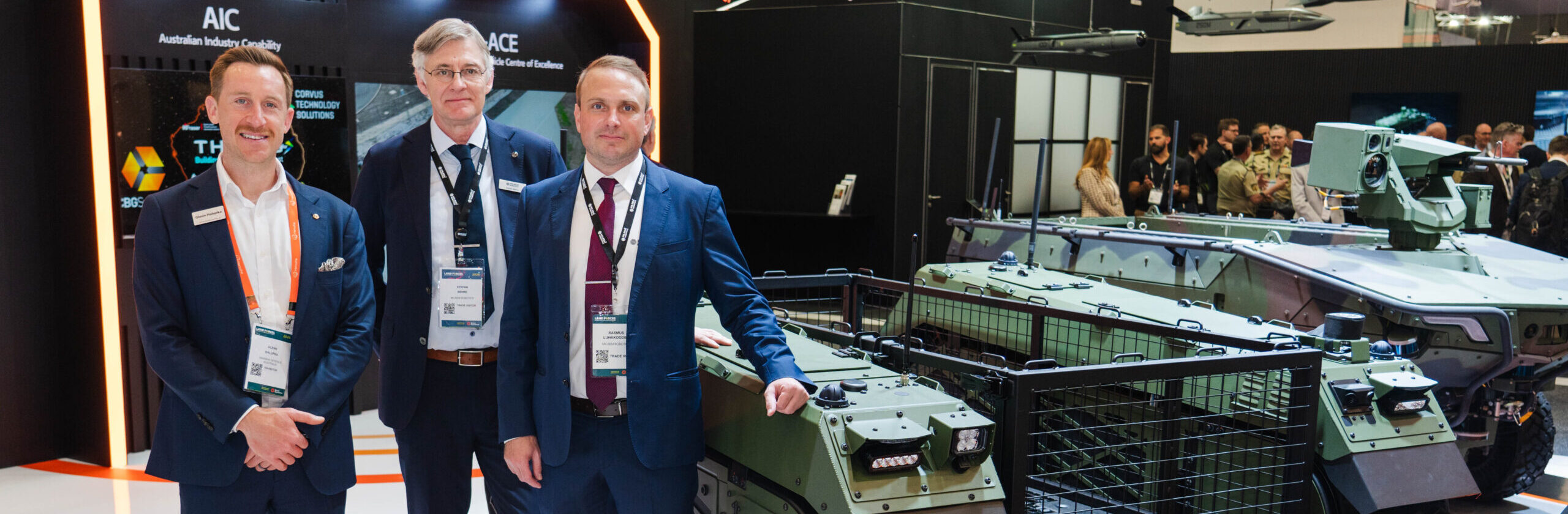
In addition, Estonia has become an influential leader in the development of the European security and defence industry over the past few years. Defence investments create opportunities for scaling our green technologies when we use them as leading markets for green technologies. Renewable energy and circular economy solutions for materials increase defence capabilities by meeting the defence sector’s needs for energy autonomy, security of supply, low visibility, and logistical independence. Conversely, the defence sector can provide primary demand for green technologies, accelerating their market readiness for civilian use. This will turn the defence industry into a platform where green technologies can mature, scale up, and prove their reliability in the most demanding conditions.
The combined effect of these strengths gives Estonia the opportunity to play a greater role on a European and global scale than our size would suggest – not only as a technology developer, but also as a strategic direction setter and a leader in clean industry, where energy security, defence capabilities, and the green transition support each other.
This content is funded by the European Union – NextGenerationEU.
Are you interested in trading with Estonia? Enterprise Estonia is providing sourcing services for foreign enterprises. Contact Estonian export advisors or use our free e-consulting service to start trade with Estonia.