The nominees for the Entrepreneurship Award business competition’s Exporter of the Year category have successfully entered large markets and aim for exponential growth. Key themes include local design, a high level of automation, and pricing that reflects high added value.
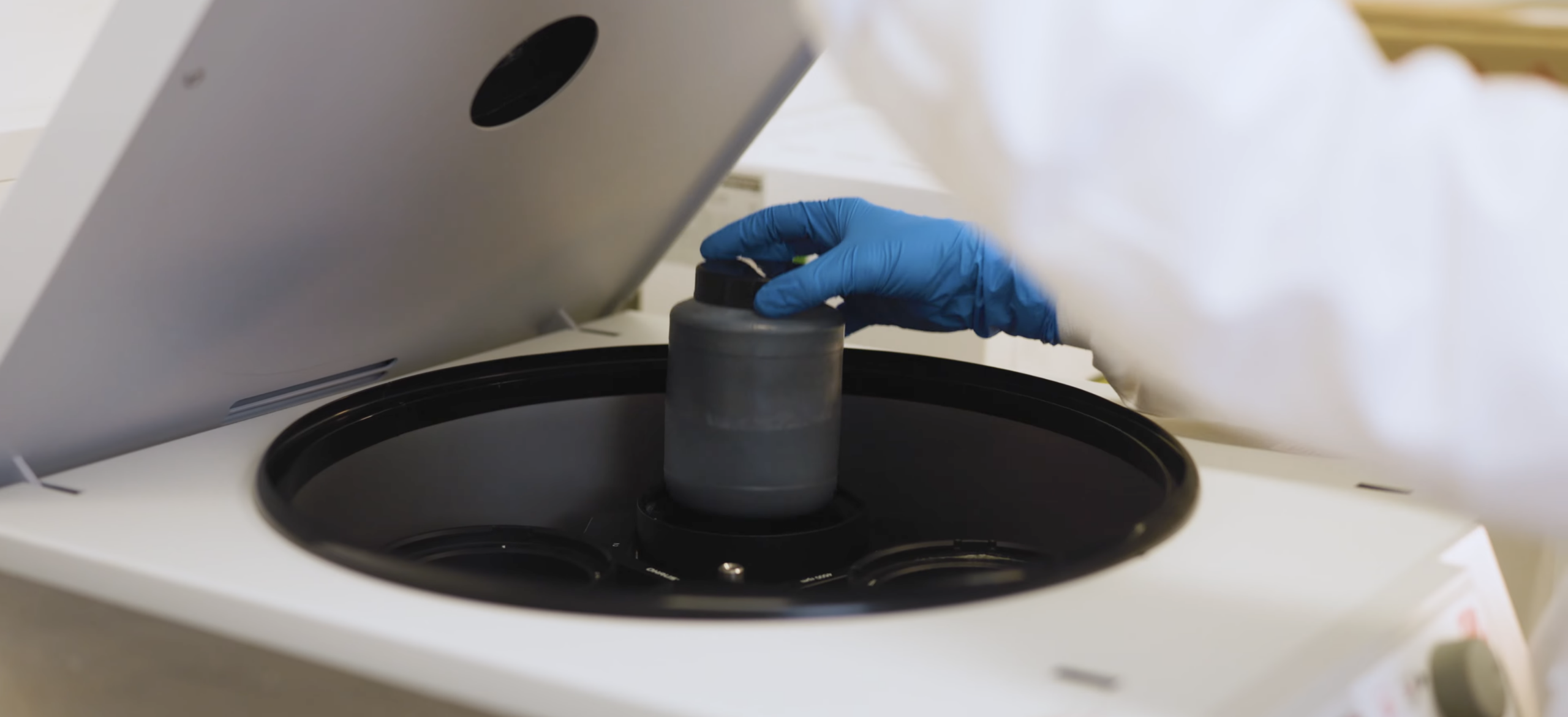
The first nominee, Tech Group, is a mechanical engineering company that develops and manufactures complex equipment. “Virtually everything we produce in terms of mechanical engineering is exported,” emphasises Marketing Manager Maiko Kiis. This includes sophisticated, electronics-rich machinery used, among other things, in the production and testing of semiconductors, where precision often means micrometres (e.g. a human hair is 70 micrometres thick) or even nanometres (e.g. a DNA strand is two nanometres wide).
“We have a new, modern building and have invested significantly in digitalising production. When a client visits our factory, it usually leads to a contract—the sight speaks for itself.”
Maiko Kiis, Marketing Manager at Tech Group
In addition, the company develops automation and robotics solutions that help make production processes smarter. “We develop and install production lines, integrate industrial robots, and design industrial automation solutions,” Kiis explains.
A steady growth curve
The company sees itself not merely as a service provider but as a partner that supports the client throughout the development process—from engineering and prototyping to production. Although Tech Group focuses more on developing unique and complex solutions rather than mass production, its goals are far from modest. “Our objectives are ambitious—the growth curve is steadily upward,” Kiis confirms.
Last year was a successful one for Tech Group. Thanks to its international reach, the company has balanced risks associated with individual markets. “When our clients do well, so do we,” notes Kiis. Their primary markets are currently showing a growth trend.

Tech Group´s factory. Photo: Tech Group
Germany as an export pillar
One of their key markets is Germany, which accounts for a significant portion of international sales. “We have large and strategic key clients there, with whom we’ve been collaborating for years,” says Kiis. Projects aimed at Germany focus primarily on ultra-precise and highly automated equipment used in photonics, photolithography, and chip assembly and testing.
Read more about the nominees Tech Group, Wermo and Auroom.
The company does not aim to conquer markets country by country; instead, it selects partners based on sectors. “We don’t have a strategy like ‘now we’re entering the French market’. Instead, we try to diversify and keep the portfolio balanced,” the marketing manager explains.
New opportunities are also being explored in Switzerland and Poland, and developments outside Europe are closely monitored. Although Tech Group does not have direct representation in the USA, a significant portion of its output reaches the country via clients.
Trust as a competitive advantage
Tech Group is a fully B2B company, where trust once earned can lead to long-term cooperation. “We have a new, modern building and have invested significantly in digitalising production. When a client visits our factory, it usually leads to a contract—the sight speaks for itself,” says Kiis.
“Our strength lies in supporting the client from idea to product. Many start-ups or scale-ups lack the resources or expertise to start production or handle engineering. We have the necessary technical know-how and experience to take on that responsibility.”
Maiko Kiis, Marketing Manager at Tech Group
The company also stands out by offering development services in addition to manufacturing. “Our strength lies in supporting the client from idea to product. Many start-ups or scale-ups lack the resources or expertise to start production or handle engineering. We have the necessary technical know-how and experience to take on that responsibility,” Kiis explains.
This flexibility is also made possible by the company’s moderate size. With around 130 employees, Tech Group can respond quickly and offer solutions that large corporations may be unable to provide.
A mission to automate
The company’s growth forecasts are optimistic. “This year we’re seeing modest growth, but in the longer term, we aim to multiply our turnover,” says Kiis.
Alongside its ambitions, Tech Group sees a broader mission—to promote automation and robotics that help increase the added value of Estonia’s economy. “Automation frees people from routine tasks and allows them to focus on more meaningful work. That’s our motivation and broader goal,” Kiis emphasises, adding that the company has been doing well despite global economic concerns.
“At the moment, the outlook is positive. There are companies struggling, but we’re not in the same boat.”

CEO of Wermo Raul Vene (left) and Marketing Director Peeter Kuum. Photo: Arvo Meeks/Southern Estonia Postimees/Scanpix Baltics
Wermo’s quality is too costly for the domestic market
The second nominee for Exporter of the Year is furniture manufacturer Wermo. Once a prominent player in the Estonian market, this long-established company now sees growth only in foreign markets—where people have more purchasing power.
Peeter Kuum, Marketing Director at Wermo AS, admits that the domestic market has long ceased to be where a local furniture manufacturer could expect strong growth. In Estonia, sales are virtually zero. While 10–15 years ago Wermo was a notable brand among local consumers, today, Estonia is more of a passing chapter. “The volume of the residential furniture market in Estonia is so small—especially in the higher price segment—that no manufacturer could survive here, and the cost-benefit ratio is completely off,” Kuum notes.
“We don’t stand a chance with simple products like a standard square cabinet. Our niche lies in more complex items, where design combined with engineering expertise, quality, and reliable delivery creates value.”
Peeter Kuum, Marketing Director at Wermo
A focus on exports has yielded results. The year 2024 was strong for the company—turnover increased, profits remained on target, and the first half of 2025 has exceeded expectations. However, the cost surge cannot be ignored: input and transport costs pressure manufacturers. “In export markets, you can’t immediately pass price increases on to clients—prices are stable, and competition is fierce,” Kuum points out.
A niche in more complex products
Wermo does not attempt to compete with cheap furniture. “We don’t stand a chance with simple products like a standard square cabinet. Our niche lies in more complex items, where design combined with engineering expertise, quality, and reliable delivery creates value,” the marketing director emphasises.
Compared to global giants, the company is a micro-manufacturer, which makes fast delivery, smaller batches, and personal relationships key. “People, not companies, do business. The end customer must be happy—if something breaks, we solve the problem ourselves rather than shifting responsibility to the reseller,” Kuum explains.

Wermo is a well-known manufacturer of quality furniture. They have a limited clientele in Estonia, as most of their production is exported. Photo: Wermo
Strong performance in major markets
In recent years, Germany and the USA have delivered the most significant growth for Wermo in terms of figures. In Germany, success is built on long-term client relationships nurtured over many years. “It’s not a one-off project. Once you gain a client, you have to start building the relationship. In our business, that means constantly developing new products and bringing them to market,” Kuum describes.
Growth in the USA has been exponential. Wermo even has a subsidiary there, enabling local deliveries and retail sales. “It’s a huge market that requires a lot of learning, but the potential is enormous. That’s why we plan to expand in that direction,” says the marketing director.
“Modern production is like the automotive industry—components go in at one end and finished products come out the other. In between, it’s robots and production lines.”
Peeter Kuum, Marketing Director at Wermo
Within Europe, the company continues to explore opportunities to expand its network of existing partners. Countries with potential include France, Switzerland, and Denmark. “South Korea also seemed interesting, but the language and cultural barriers are so significant that we’d need our own person on the ground,” Kuum adds. In the longer term, it may re-emerge as a viable option.
Automation as the only way forward
Looking ahead, Kuum stresses that automation is the key to developing furniture manufacturing. “Modern production is like the automotive industry—components go in at one end and finished products come out the other. In between, it’s robots and production lines,” he explains.
Wermo believes that Estonia can export not only furniture but also manufacturing know-how. “We can’t rely solely on consultants who issue invoices but take no responsibility. Every company must have its own engineer and production planner. That’s added value,” Kuum emphasises.
Unfortunately, Estonia faces a shortage of engineers. “We need more young specialists coming out of schools—people who can write programmes for robots and, figuratively speaking, live in production 24/7. It’s an investment that will only start to pay off years down the line,” he adds.

CEO of Auroom Marten Merdikes. Photo: Auroom
Auroom sauna sales are soaring
The third nominee for Exporter of the Year is sauna manufacturer Auroom. The year 2024 marked an actual turning point for the company. Auroom opened a new outdoor sauna factory in Tõrvandi, Tartu County, significantly boosting its production capacity. Additionally, the production of barrel saunas was consolidated under its Latvian subsidiary, Auroom Saunas SIA.
“We completed the most exclusive spa saunas in our history in Switzerland, which confirms that we are moving into the ranks of top-tier players.”
Marten Merdikes, CEO of Auroom
The company not only strengthened its manufacturing base but also expanded into several new markets. “We completed the most exclusive spa saunas in our history in Switzerland, which confirms that we are moving into the ranks of top-tier players,” said CEO Marten Merdikes. This year, Auroom is continuing with a growth rate of 25%, and according to Merdikes, the company is firmly on its way to becoming one of the world’s most recognised and large-scale sauna brands.
Celebrities enjoy products from the Estonian sauna manufacturer
The company’s focus is twofold: on the one hand, standard saunas account for half of its turnover; on the other, custom projects are limited only by the client’s imagination. It is the latter that has brought Auroom the most significant international recognition. “We’ve produced over 10,000 saunas, but the ones that stand out most are the luxurious spa and hotel saunas,” notes Merdikes. Hotel chains such as Six Senses and Marriott are among the most well-known clients.
A good example of the level of customisation is the Les Bains de Lavey spa in Switzerland, for which Auroom produced four exceptionally complex saunas. The company’s products have also found their way into the homes of celebrities. Sauna enthusiasts include singer Dua Lipa, model Gigi Hadid, and footballer Atomu Tanaka. “This shows that our solutions appeal to large-scale projects and individual clients,” says Merdikes.

International hotel chains and spas are Auroom’s most well-known clients. Photo: samueldevantery.com/Auroom
Export engine running strong
Auroom’s products are exported to around 30 countries, with key markets including Japan, Australia, the USA, and Central Europe. These regions have become strategic directions, as consumers value quality and design.
“Our strategy is centred on partnerships,” Merdikes emphasises. As the entire business is B2B, the most essential task is to find reliable distributors who can represent the Auroom brand with integrity. The company moves deliberately into strategic markets but only announces them publicly once the first projects have been successfully completed.
“We’ve produced over 10,000 saunas, but the ones that stand out most are the luxurious spa and hotel saunas.”
Marten Merdikes, CEO of Auroom
In the United States, interest in saunas and wellness products remains strong, but political and economic developments have created uncertainty. “The volatility of customs tariffs makes distributors cautious,” Merdikes admits. That’s why continuous communication with partners is essential. In the long term, Auroom still sees enormous growth potential in the US—a market where the wellness sector is booming.
The possibilities in the home market
The company focuses on affluent regions where sauna culture is not yet fully developed. “That’s where the greatest growth opportunity lies for us,” says Merdikes. Interestingly, Estonia has also emerged as a new target. Having previously focused mainly on exports, Auroom now sees potential in the domestic market—particularly in spas and hotels, where the exclusive experience familiar from international projects could reach local consumers.
The company’s plans are ambitious: to continue its current growth and bring Auroom saunas into more homes worldwide. “Our long-term goal is to become the world’s leading custom sauna brand,” Merdikes confirms. He says they are still “2–4 competitors away” from that goal. However, the big vision keeps the team motivated and constantly seeking innovation.
GOOD TO KNOW
- The Entrepreneurship Award is Estonia’s longest-running business competition. Organised by Enterprise Estonia and the Estonian Employers’ Confederation, it is celebrating its 30th anniversary this year. The competition recognises the leading companies in seven categories.
- This year’s top companies will be announced on 1 November at the awards gala “Estonia’s Best Companies”, broadcast by ERR.
- The Entrepreneurship Award is co-financed by the European Union.
Are you interested in trading with Estonia? Enterprise Estonia is providing sourcing services for foreign enterprises. Contact Estonian export advisors or use our free e-consulting service to start trade with Estonia.