Sustainable building materials are key to achieving climate neutrality in the construction sector. Estonia is at the forefront of this movement, relying on innovative products such as cross-laminated timber (CLT) and thermally modified wood. These materials meet the highest environmental standards and set new benchmarks in the industry.
The construction sector faces significant challenges: rising energy prices, scarce resources, and the urgent need to achieve climate neutrality by 2050.
Timber as a building material offers enormous potential. According to the European Confederation of Woodworking Industries (CEI-Bois), greater use of timber in construction can substantially reduce the emissions embodied in new buildings. Estonian companies are actively contributing to these goals.
Innovations from Estonia: from factory to construction site
Estonian manufacturers such as Arcwood and Matek combine cutting-edge technology with sustainable processes. Arcwood, an expert in cross-laminated timber (CLT) and glued laminated timber (GLT), offers tailored solutions for complex construction projects. These timber products are not only carbon-neutral but also enable faster construction. For example, CLT panels can be prefabricated in the factory and assembled on-site within days, cutting construction time compared with traditional methods.
Matek is revolutionising energy-efficient renovation. Its prefabricated façade elements integrate insulation, ventilation, and external finishes, potentially doubling the renovation rate. This is particularly relevant in Germany, where the Federation of German Industries (BDI) sees a large renovation backlog building up over the next decade.
Timber and the circular economy
Estonia’s innovations also promote the circular economy. Thermally modified wood, such as that produced by Thermory, is durable and resistant to moisture and pests. It is ideal for interior construction and sauna designs, with by-products from timber processing being repurposed.
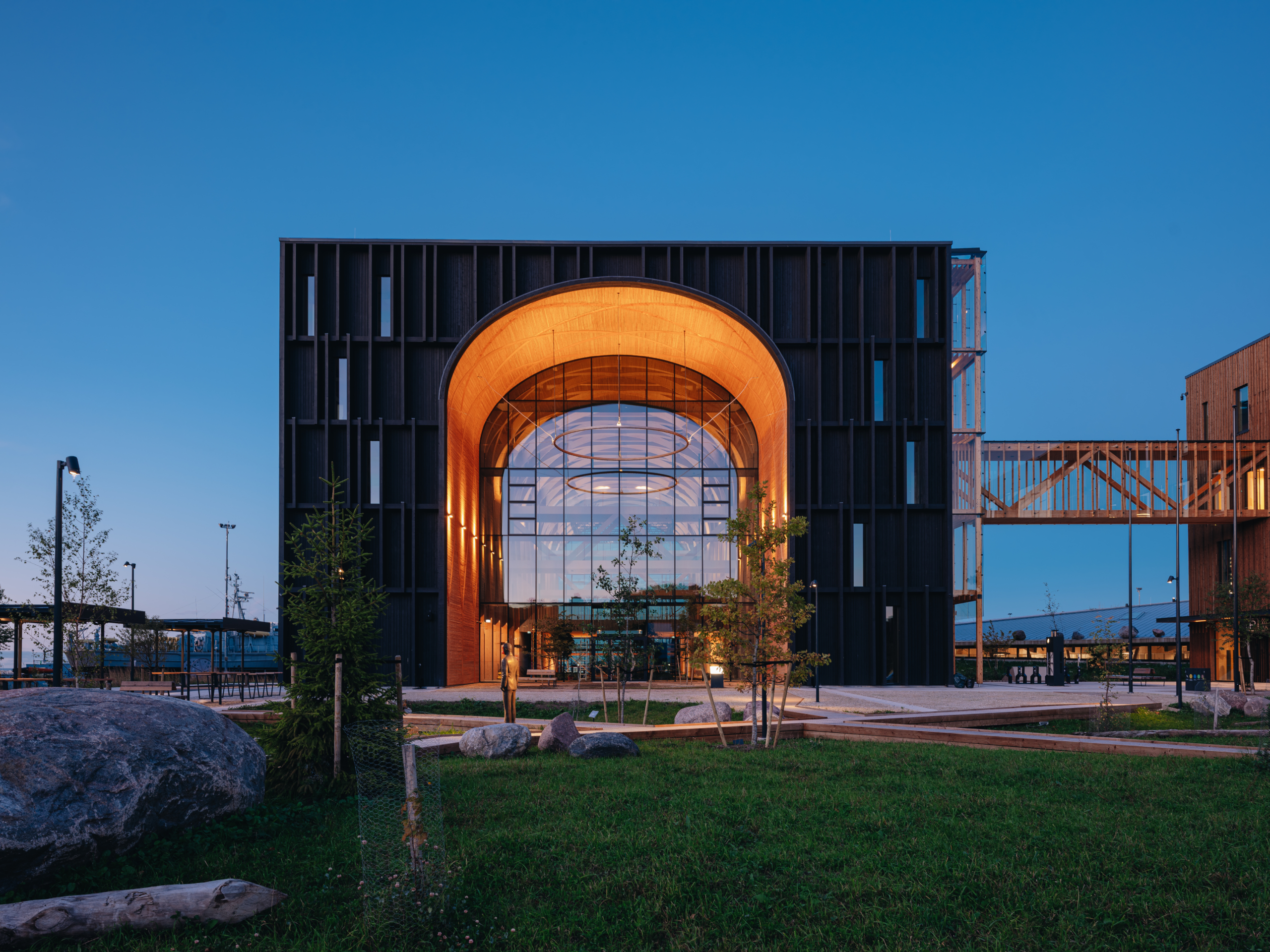
An impressive example of sustainable construction, the Pelgulinna State Upper Secondary School was Estonia’s largest wooden building when it opened in 2023 and remains a symbol of environmentally friendly architecture. The title has since passed to Loodusmaja, the 25,000 m² state complex in Tallinn’s Noblessner district. With an 85% wooden load-bearing structure and innovative design solutions, the building, completed in 2023, significantly reduces energy consumption and provides a healthy learning environment.
Elements such as thermally treated pine on the façade and sophisticated lighting concepts create an inspiring atmosphere that fosters sustainability and creativity. The project shows how timber construction delivers future-oriented solutions for the construction industry.
Growing demand for sustainable building materials
Demand for sustainable building materials is continuously growing. The global timber construction market is expected to keep expanding through 2030. Estonia demonstrates how ecological and economic requirements can be harmonised. Companies such as Viking Window and Iglucraft combine modern design with energy efficiency and sustainability, setting new standards for climate-neutral architecture.
Estonia is also making waves with its Redesign the Future campaign: iconic German landmarks are reimagined in timber using AI, offering innovative perspectives on sustainable construction.
This content is funded by the European Union – NextGenerationEU.
Are you interested in trading with Estonia? Enterprise Estonia is providing sourcing services for foreign enterprises. Contact Estonian export advisors or use our free e-consulting service to start trade with Estonia.